There are no items in your cart
Add More
Add More
| Item Details | Price | ||
|---|---|---|---|
If your study desk is piled high with heavy CAT textbooks from five years ago, you are preparing for the wrong exam. Most Class 11 and 12 students get completely overwhelmed because they are handed recycled MBA materials that do not match the actual IPMAT paper. This guide explains Books for IPMAT preparation 2026 clearly and shows what to evaluate next.
You do not need to solve thousand-page books to clear IIM Indore or IIM Rohtak. Cracking this exam is about building strong foundational concepts and practicing the right question types, not blindly solving difficult, graduate-level math problems. Think of your textbooks as training wheels that teach you basic formulas before you move to timed practice.
Instead of wasting time on the wrong syllabus, you need a targeted approach. Focusing on the exact books for IPMAT preparation 2026 will streamline your study plan, improve your conceptual clarity, and help you avoid the outdated materials that drain your confidence.
Finding the right study material means looking past the heavy, outdated books that most coaching centres recommend. Many students waste months trying to solve advanced CAT textbooks, only to realize those questions are far too complex for a Class 12 graduate. Instead of blindly following recycled lists, you need a targeted approach that focuses on the exact syllabus for IIM Indore and IIM Rohtak. A modern study plan pairs the right foundational textbooks with structured online IPMAT preparation.
The core purpose of your booklist is to build a solid foundation before you move on to advanced practice. Reading alone will not help you clear the cutoffs. Once you understand a concept, you must apply it under time pressure by taking a relevant mock test. Serious aspirants make the transition from basic book knowledge to actual exam application by following two simple rules:
Preparing for the modern IPMAT and JIPMAT exams requires a completely different approach than studying for a traditional MBA entrance test. Most legacy booklists are packed with heavy jargon designed for college graduates, which only frustrates high school students. Instead of decoding complicated formulas, you need concept-driven materials that explain the basics clearly. Good coaching focuses on building this strong foundation rather than handing you a massive textbook. Your first step is finding resources that break complex math into simple steps.
A winning strategy for 2026 must also balance your effort across all sections. Many students make the mistake of only practicing tough math problems, ignoring the verbal section until the last month. To clear the cutoffs, you need a structured plan covering Quantitative Aptitude (both multiple-choice and short-answer formats) alongside Verbal Ability topics like reading comprehension, vocabulary, and grammar. Analyzing previous year questions will show you exactly how the exam tests your conceptual clarity.
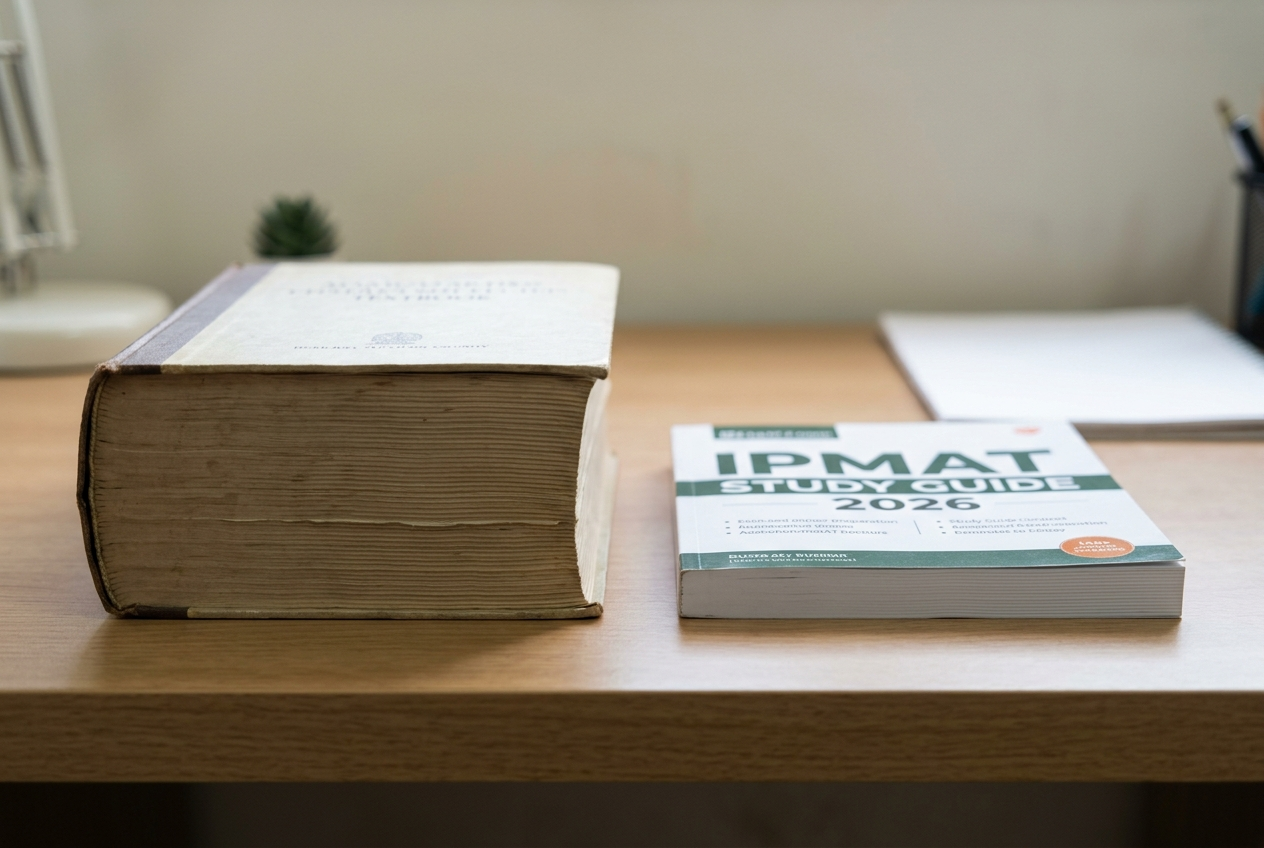
Many students pick up heavy CAT preparation books, assuming harder practice automatically brings better results. This is a dangerous trap. CAT questions are designed for graduates and focus on complex logic. In contrast, the IPMAT tests your speed and foundational clarity. Using advanced MBA materials too early wastes time on concepts that never appear on your exam. You need dedicated books that match the actual test.
Choosing the right material requires understanding your current skill level. A smart study plan begins with foundational books to build core concepts in Arithmetic and Algebra. Once your basics are strong, you can supplement your reading with targeted materials from a structured online coaching program. To decide between basic books and advanced CAT materials, use these criteria:
Building a solid foundation requires picking materials that match the actual exam level. Rely on targeted resources like Quantitative Aptitude by R.S. Aggarwal for basic concept building. You do not need to solve every single chapter. Instead, prioritize high-weightage topics like Arithmetic and Algebra first. Once you understand percentages and linear equations, move on to Numbers and Geometry.
Mastering the verbal section demands a different approach, focusing heavily on reading comprehension, vocabulary, and grammar. Word Power Made Easy by Norman Lewis remains the gold standard for building a strong vocabulary. Consistent reading of daily editorials will naturally improve your reading speed, which is crucial for IIM Rohtak where accuracy is heavily tested. To maximize these resources, follow a clear timeline:
Many students fall into the trap of hoarding massive stacks of legacy MBA preparation books. When you pile up outdated textbooks designed for older exam patterns, you waste precious time on complex theories that rarely appear in the actual test. For example, spending weeks trying to solve advanced CAT-level geometry problems from a ten-year-old book will only leave you frustrated.
The smartest way to approach your study materials is to keep your desk clean and your resources strictly limited to what matters for 2026. You only need one primary concept book per section, paired with a structured online course. Focusing on a few highly relevant resources improves your conceptual clarity dramatically.
Reading a textbook is only the first step. To clear the cutoffs, you need a system that moves from learning a concept to testing it under pressure. The most reliable flow is simple: build the concept, practice without a timer, apply it to exam-level questions, take a mock test, and analyze your mistakes. When you rely only on books, you miss the interactive problem-solving that modern online preparation provides. A book might show one long way to solve a geometry problem, but a good teacher will show a faster shortcut.
This is where a structured platform like Rodha bridges the gap between self-study and exam readiness. Rodha gives you the deep concept clarity needed for Quantitative Ability before you even open a practice book. Once your foundation is strong, you can use your books for targeted practice and move into full-length mock tests.
Most recommended booklists are simply recycled CAT lists that force heavy MBA textbooks onto high school students. When you are balancing board exams with entrance prep, you do not have time to decode advanced concepts meant for college graduates. Your priority should be finding books that strictly follow the actual 2026 IPMAT syllabus. A targeted approach keeps your preparation focused on the exact arithmetic, algebra, and reading comprehension levels tested in the exam.
To make your decision easier, here is a quick summary of what actually matters when choosing your study material for the upcoming year:
Readers evaluating this topic also tend to search for:
If you are starting early, avoid heavy CAT textbooks. Focus on foundational materials that build core quantitative and verbal skills without overwhelming you. Pair a standard high school mathematics refresher with targeted IPMAT coaching materials, like those from Rodha, to ensure you stay aligned with the actual exam pattern.
We generally advise against it for early-stage preparation. Arun Sharma is designed for CAT aspirants and often covers concepts at a depth unnecessary for IPMAT. Using these books can lead to burnout and wasted time. Stick to resources specifically calibrated for the IPMAT syllabus and difficulty level.
For IPMAT Indore, your primary focus should be on higher mathematics and core arithmetic. Instead of buying generic competitive exam books, use NCERT textbooks for Class 11 and 12 mathematics to build your foundation. Then, transition to specialized IPMAT coaching modules that offer targeted practice questions and modern mock tests.
Skip the legacy grammar encyclopedias. The modern IPMAT Verbal Ability section tests reading comprehension and contextual vocabulary. Read daily editorials from reputable newspapers to build comprehension speed. Supplement this reading habit with targeted practice from modern IPMAT coaching materials to master specific question types like parajumbles and critical reasoning.
Books alone are never enough. While textbooks build your foundational knowledge, the IPMAT is a strictly timed, computer-based test. You must integrate full-length mock tests into your routine early on. Mocks teach you time management, question selection, and exam temperament—skills no traditional textbook can provide.
The core syllabus overlaps, but the exam patterns differ. IIM Rohtak includes Logical Reasoning and focuses more on speed, whereas IIM Indore emphasizes higher mathematics and deeper conceptual clarity. You do not need entirely different books, but you must adjust your practice strategy and take institute-specific mock tests.
Droppers should spend minimal time on basic textbooks and immediately prioritize advanced problem-solving and mock analysis. If your foundation is clear, skip the introductory books entirely. Focus on high-yield coaching materials, sectional tests, and rigorous mock test analysis to identify and fix the specific gaps that held you back previously.
Supplement your reading with Rodha's free mock tests. Start applying these strategies by taking a timed exam to identify your baseline score, fix your weak spots, and refine your study plan with confidence.

GDPI Prep 1
A California-based travel writer, lover of food, oceans, and nature.